

Info, Latest News
Is Your Freeze Dryer Truly Safe?
For most of us, the journey into freeze-drying is simple, you buy the machine, plug it in and start freeze-drying. We rarely stop to ask what’s happening behind the door. But when you compare a standard home unit to a machine engineered for pharmaceutical operations, the differences are more than just technical, they’re essential.
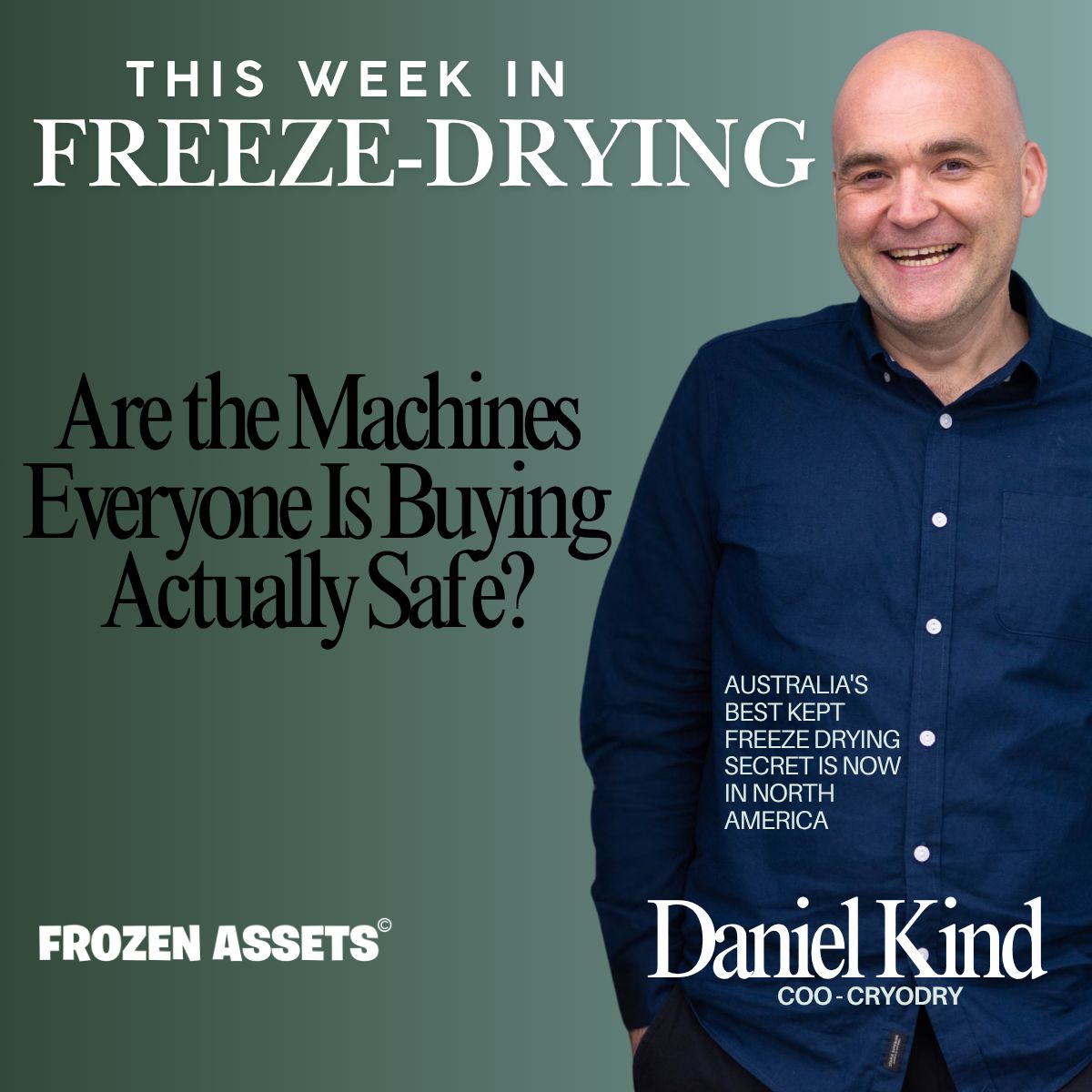
Recently, our COO Daniel Kind sat down with the Frozen Assets podcast in Nampa, Idaho at DIY Freeze Dry, for a deep dive into the industry standards (and lack thereof) that every owner should be aware of.
The “Invisible” Risks in Your Kitchen
During the interview, Daniel pulled back the curtain on two major areas where many home units fall short:
- Vacuum Chamber Contamination: Did you know that some machines use adhesives inside the chamber that can “outgas” volatile organic compounds (VOCs) onto your food? Daniel explains how CryoDry’s “sandwich” shelf design eliminates the risk of food contamination.
- The Certification Gap: While many machines are sold as “safe,” very few carry the rigorous UL, CSA, CE, RCM electrical safety and HACCP International food safety certifications that the CryoDry freeze-dryers holds.
CryoDry was founded in Sydney by a team with over 60 years of R&D experience in the scientific and pharma sectors. We’ve taken that expertise and packed it into the CD8 Pro and CD8 Home, utilising eco-friendly R290 refrigerants and inverter-based systems that are as kind to the environment as they are to your power bill.
Watch Part One of the Series
Click here to watch the full interview on YouTube